Part of an ongoing series on how Korean sourcing and manufacturing projects actually run. Earlier posts covered recent projects — this one goes further back, to my time at a Korean auto parts manufacturer, where I first went through the process of becoming a supplier to a major European automotive alliance.
The first gate — the alliance’s supplier evaluation standard
Any parts supplier looking to work with a major automaker eventually runs into a process like this: a joint quality standard the alliance uses to evaluate a supplier’s quality management system and production processes. It scores several areas — quality management, defect analysis, quality target-setting, project management, process FMEA, shop floor processes, and more — on a numeric scale, and rolls that up into a final grade.
Here’s the part people often don’t expect: passing an audit with the local subsidiary in Korea doesn’t automatically qualify you to bid on business with the automaker’s overseas headquarters. To supply the parent company directly, headquarters sends its own audit team to evaluate you separately, and you need a minimum grade before you’re even eligible to bid. Only after clearing that grade do you get access to the supplier portal to see open tenders.
Preparing for the audit was its own project. All the evaluation criteria documents came from headquarters in English, and at the time there was almost no reference material translated into Korean. So I translated all of it myself and distributed it department by department, so each team understood exactly what the customer expected and could prepare accordingly. Once that groundwork was done, every document needed for the actual audit day had to be re-prepared in English and sent to the audit team in advance, so they could bring it with them when they visited the Korean factory and verify that what was on paper matched what was actually happening on the floor.
I still remember the tension of audit day itself. I gave the presentation myself, in a room that included senior purchasing executives from headquarters, directors from the local subsidiary, and our own company’s leadership. I was still fairly green at the time, and the systems involved were a lot to fully grasp — but I opened with a greeting in halting local language, which got a surprisingly warm reaction, and the presentation went smoothly from there. The hardest part came after: over an hour of walking the factory floor under close scrutiny. We came out of it with a strong grade, which is what earned us the right to bid at all.
Growing into technical sales
I had been working in investment-related roles in Seoul when an acquaintance recommended me for a position at a Korean auto parts manufacturer. I started on the overseas business side, and quickly realized that handling RFQs properly meant understanding production, machining, quality, and quality management from the inside — so I rotated through each department before eventually landing in the technical research division, where I began working in technical sales in earnest.
Around that time, we won development work for a European automaker’s bracket component, but the automaker ran into financial trouble not long after, and the project never made it past the development stage into production. The company then pivoted toward other major global automakers, winning business with one U.S. manufacturer while also clearing the alliance audit described above.
From there I worked technical sales roles connected to well-known German and American automotive suppliers and manufacturers, traveling across Europe. Even after I was later recruited to a different company, the relationships I built during this period stayed with me.
An engine component order, and a phone call before dawn
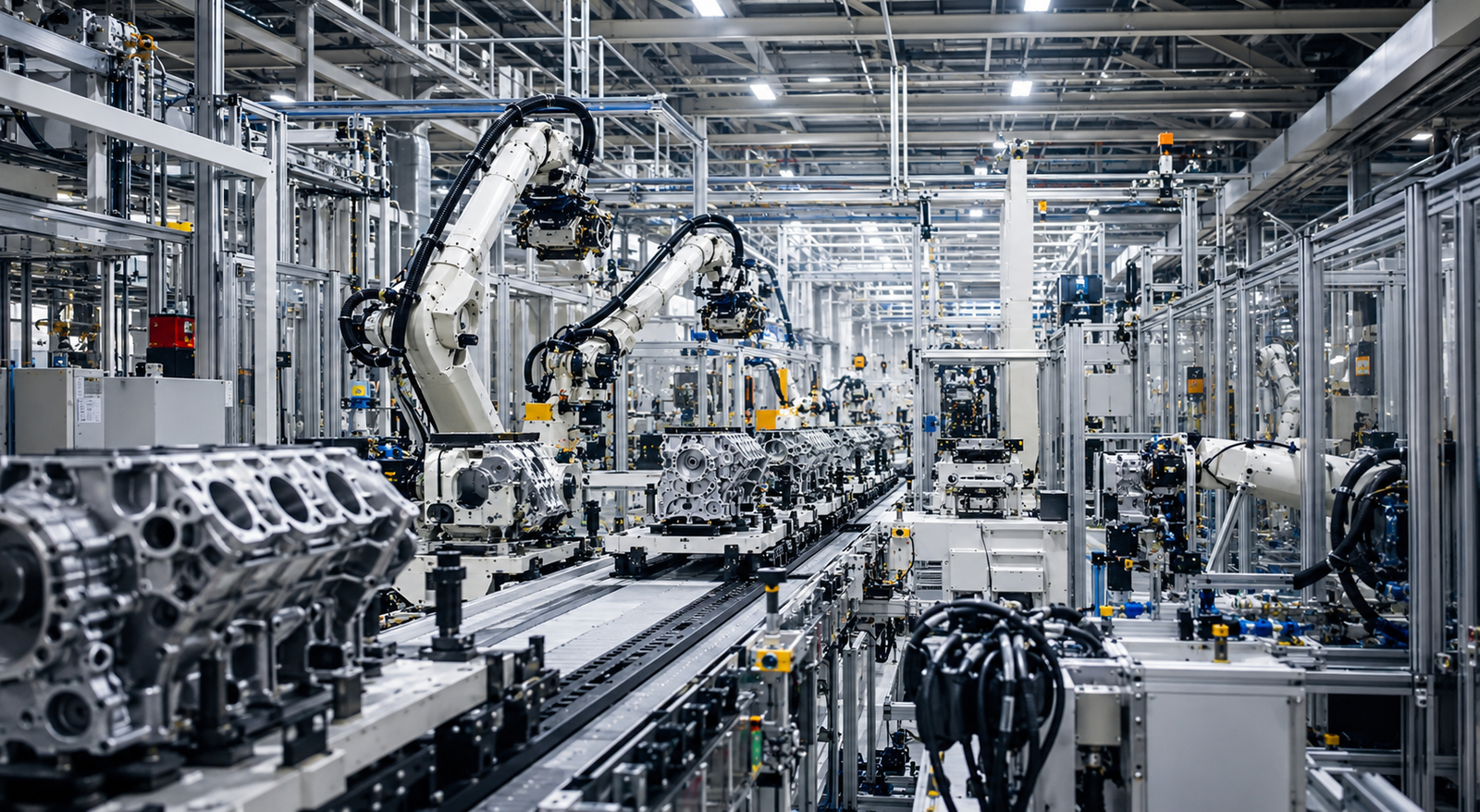
After clearing the alliance audit, we won an order for a component going into a mid-size diesel engine platform. That engine was assembled and tested at a plant in Europe before going into the alliance’s premium SUV lineup, and our parts shipped on the same production schedule.
Passing an audit rarely means you’re handed a large order right away. You first have to prove yourself on a small development run before you’re even considered for full production volume. We cleared the development stage cleanly — prototype delivery and engine testing both passed without issue — and the company moved into mass production, shipping steadily to that assembly plant.
About seven or eight months into mass production, my phone rang before dawn. It was the overseas purchasing contact, sounding urgent. When I asked what was wrong, he said the assembly plant was running leak tests after engine assembly, and water was getting through. They didn’t know exactly where it was coming from, but they suspected it was our part.
I called our technical director immediately to brief him and have him report to our CEO. I also asked the overseas purchasing contact to have the plant’s engine test manager photograph the affected area in detail and send it to me by email. When I checked my inbox after getting to the office, it was confirmed — the leak was coming from our part. At the joint where we supplied the fitting, high pressure was gradually working the pipe connection loose. I remember feeling like the floor had dropped out from under me.
The cause, and three weeks that started overseas
The root cause turned out to be a subcontractor who had changed a component specification without authorization. Design changes like that are never supposed to happen without notifying the customer and getting sign-off. Everything had been fine before the change; the problem started only after the revised spec went into production. Worse, thousands of parts built to the flawed spec had already shipped.
Late that afternoon we held a video call with the overseas purchasing team, the assembly plant’s director, and the assembly manager — the mood was as serious as it gets. After instructing each department to prepare a root-cause analysis and countermeasure plan (an 8D report), I flew out immediately along with our machining manager and our technical research director.
Watching the leak test in person and inspecting the affected engines, the situation turned out to be worse than we’d feared. Some engines had already been transferred to another brand under the same alliance, destined for actual vehicle assembly. The customer’s team argued that even previously-passed units couldn’t be trusted anymore, that this was a recall situation, that we should bear every cost, and that we should also compensate them for the line stoppage.
How do you respond to that? I held my ground. I told them that if we accepted those terms, our company wouldn’t survive — that the fault was clearly ours and we’d take full responsibility for fixing it, but escalating the situation beyond what was necessary wasn’t fair to anyone. Then I walked the room through the data we’d brought from Korea, point by point. I asked for time to check lot numbers — both the parts still in inventory and the ones already installed in engines — and once we had that, proposed that engines built with the affected lot be disassembled and reworked at our cost, while engines built with unaffected lots could be re-tested for leaks and shipped on to the next assembly plant as planned. When they asked whether I could actually stand behind that, I told them I would — after getting confirmation from our technical director, our machining lead, and ultimately our CEO.
That’s when three weeks of what felt like trench warfare with the local plant began. There was no way to inspect thousands of parts individually in the time we had, so we had to sort by the lot markings on each pallet. Our technical director and machining manager flew home the next day, leaving me there alone to run the sorting process at the plant every day. The plant manager told me I’d need to move to a hotel closer to the site since I’d be coming in daily — so I did, showing up before dawn each morning to work through the parts with two sorting staff the plant assigned. Every evening I’d get an update from Korea, bring the new data into the plant the next morning, hear “this isn’t convincing enough, the countermeasure isn’t sufficient,” and request another round of data from Korea. It repeated like that, day after day. I didn’t have time to see any of the local sights — it was just the hotel and the plant, back and forth.
Once the replacement parts had finished production in Korea, the company decided to air-freight them out to avoid the line-stoppage penalty ballooning further — air freight alone cost over ten million won. I asked the overseas purchasing contact to arrange expedited customs clearance in advance, and the moment we landed, staff were already pushing carts through the process. We loaded the parts onto a truck and drove several hours before dawn from the airport to the plant, opened the back gate, and handed the parts straight to the assembly line. Only after I’d sent photos and confirmed everything by phone with the purchasing contact did I finally get a moment to breathe — standing on an empty street before sunrise with a cigarette, feeling something close to relief for the first time in weeks. It really was that intense.
Even after that, there was a long back-and-forth over the claim costs. Our headquarters wasn’t willing to concede everything the customer wanted, and the customer kept pushing for more. After a genuinely difficult stretch of negotiation, both sides eventually landed on terms they could accept. Three weeks after I’d arrived, I finally slept through an entire night for the first time. I said my goodbyes to the plant staff I’d come to know over those weeks, had dinner with the purchasing contact, and flew home.
What this experience taught me
The biggest lesson from that whole ordeal was this: build a timing schedule with a remarks column, and check progress against it every single week. The weekly-tracking approach I now bring to KoreaLiaisonPM projects genuinely traces back to this experience. The next post covers a follow-on engine component project with the same alliance, at a different plant further south in Europe.
Leave a Reply