A supplier checklist is a good place to start. It tells you what to look at. But a supplier can pass a checklist and still cause trouble once the project begins. In my experience, the risk tends to hide in two places that a checklist rarely captures: what happens after an audit finds a problem, and how the supplier communicates with you.
Red flag 1: “Corrected” on paper, but the problems keep coming back
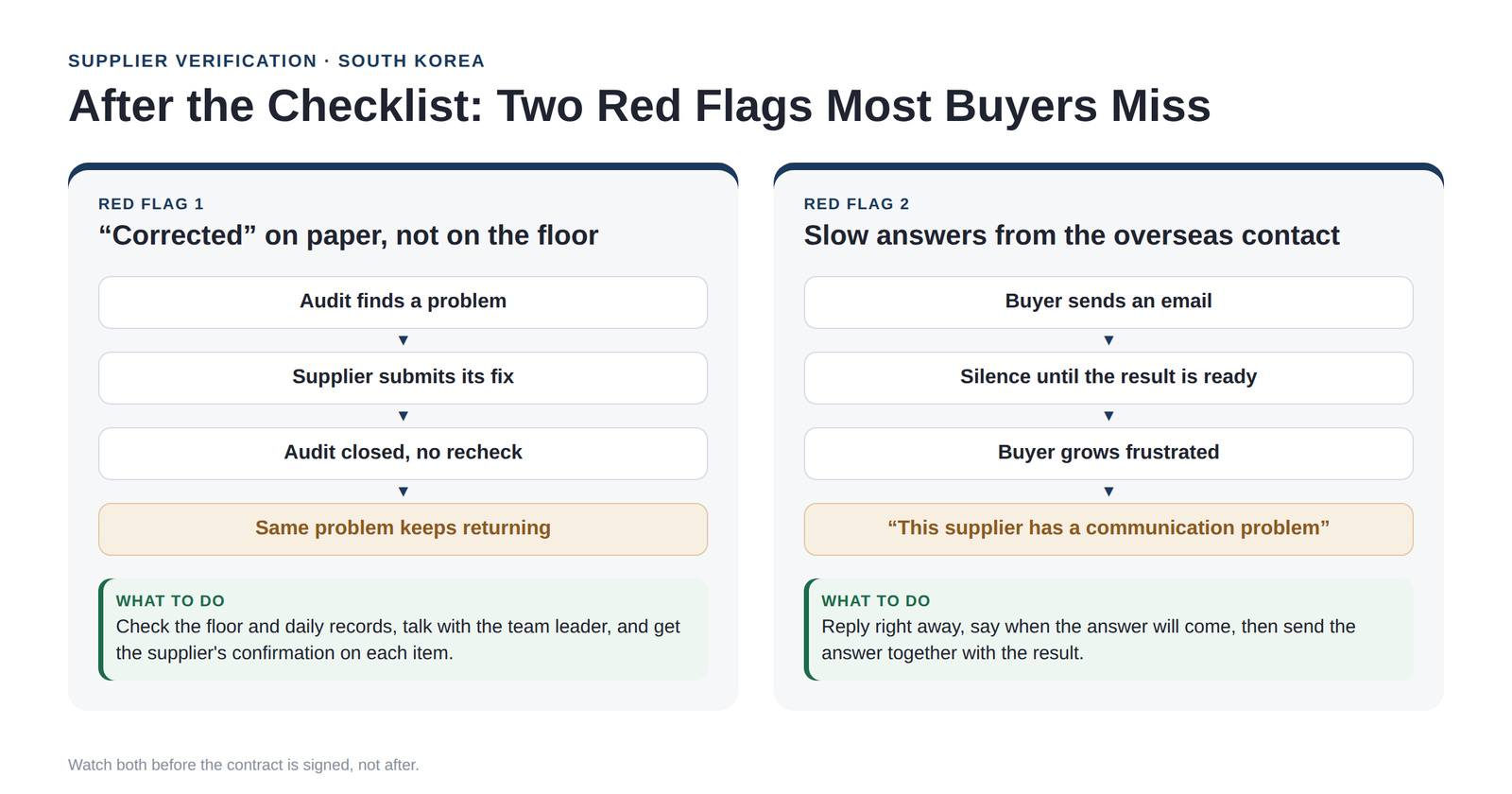
Here is how many audits end. The auditor goes through the supplier with a checklist, records the problem areas, and reports them to the company. The company fixes or improves those items and submits its response to the auditor. In many cases, that is where it stops.
Ideally, the auditor would visit once more to confirm that the improvements actually reached the shop floor. Some do. But often the auditor takes the company at its word, decides the problem has been resolved, and closes the audit.
The difficulty is that even a real improvement is hard to judge from a document. The auditor may not know the process well enough technically to tell whether the fix addresses the true cause. And no one outside the company can be sure whether the change was made from the right point of view: one that solves the problem for the buyer, or one that merely closes the finding. Buyers then end up asking the same question: we were told this was improved, so why does the same problem keep happening?
This is where problems most often arise, so it deserves close attention:
- Do not treat a submitted corrective response as proof. Read what exactly was changed and why.
- Check whether the change shows up on the floor and in the daily records, not only in a revised document.
- Spend real time talking with the supplier’s responsible team leader. Those conversations often reveal whether the team understands the cause of the problem.
- Get the supplier’s confirmation on each corrected item before you rely on it.
Realistically, an audit cannot run for days on end. That is exactly why the time you do have should go to the items that failed, and to confirming that the fix is real.
Red flag 2: Slow answers from the overseas contact
These days, even small and mid-sized Korean manufacturers rarely have a serious English problem. The more common risk is a person in the overseas contact role who has little experience with overseas buyers. If they do not understand how overseas buyers think and work, the project can become difficult in unexpected ways.
The best remedy is fast feedback. When I handled overseas sales, I would read a buyer’s email in the morning and reply right away: we have received it, and after meeting with the team we will get back to you by a specific date. Then I held the meeting and sent the answer together with the result. The buyer sees that someone is paying attention to their email, and when the result arrives, concludes that this contact can be trusted.
The common pattern is the opposite. The contact waits until the result is ready and only then replies. In the meantime, the buyer hears nothing and grows frustrated. After a few rounds of this, the buyer decides that the supplier has a communication problem.
Real communication is simple: read the email, make a judgment, reply quickly, then gather the answer with the relevant team and send it. When you evaluate a supplier, watch how fast and how clearly the overseas contact responds before the contract is signed, not after.
Where the checklist fits
A checklist is still worth using. It organizes what to look at across documents, on-site checks, finances, and communication. My free Supplier Verification Checklist covers twelve items across those areas and gives you a quick read on how well screened a supplier is.
The two red flags above are what I look for beyond the checklist when I audit and manage suppliers. To see how an on-site audit works, read What a Manufacturing Process Audit in South Korea Actually Looks Like. To see how I combine sourcing, audit, and project management, visit the Services page.