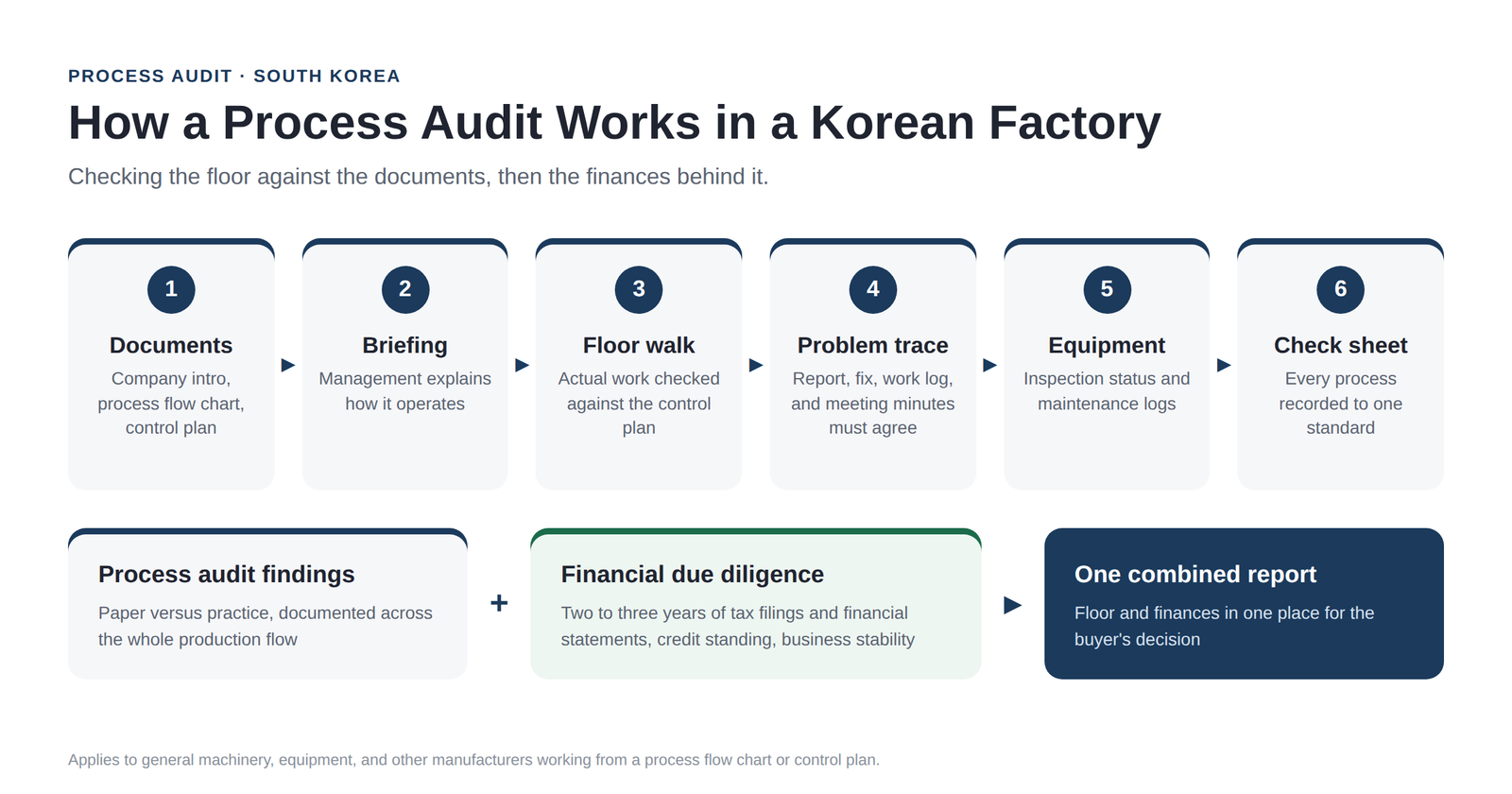
Many overseas buyers hear “we’ll audit the factory” and picture a clipboard and a quick tour. In practice, a proper process audit in Korea is a structured comparison between what the factory says it does and what actually happens on the shop floor. Here is how it works, based on the audits I have run on Korean suppliers.
Step 1: Documents come first
Before anyone visits the site, I request the supplier’s core documents: the company introduction, the manufacturing process flow chart, and the control plan. The control plan is the key one. It defines, process by process, what is checked, how often, and what happens when something goes wrong. Everything on the floor is measured against it.
Step 2: The visit begins with the company, not the factory
On audit day, the supplier first presents the company: what they make, who they supply, and how they are organized. This is not small talk. It tells me how the management understands its own operation, and it sets up the questions I will ask during the walk-through.
Step 3: Walking the floor with the control plan in hand
Then we walk the actual production line, with the process flow chart and the control plan in hand. I carry my own check sheet too, but in practice the two are very similar, because the check sheet is built on the control plan’s standards. The core question at every station is simple: is the work being done the way the documents say it is?
Step 4: Following a problem all the way through
This is where an audit gets real. I do not stop at “is there a procedure.” I follow what happens when something goes wrong:
- Was the problem reported to the people above the operator?
- After the report, was the process actually corrected?
- Does the correction show up in the daily work log?
- Do the work log and the meeting minutes from the problem meeting tell the same story?
- On the floor today, has the problem really been fixed?
A supplier can have a perfect procedure on paper. If the work log says one thing and the meeting minutes say another, or if the fix never reached the line, that gap is exactly what the audit exists to find.
Step 5: Equipment and maintenance records
At each process I also check the machine in use: has it been inspected, and is there a maintenance log to prove it? Each item goes on the check sheet, one by one. A machine that runs well today but has no inspection record is a risk, because the next breakdown will have no history to learn from.
Step 6: Recording everything on the check sheet
By the end of the walk, every process has been checked against the same standard and recorded. The result is not an impression, it is a documented comparison of paper versus practice for the whole production flow.
A process audit alone is not enough: financial due diligence and the report
Even a well-run floor can sit inside a financially fragile company, and that risk can surface in the middle of your project. So I pair the process audit with financial due diligence. I analyze the supplier’s tax filings and financial statements for the last two to three years, along with credit standing and business stability, to confirm you are getting not just a capable factory but a stable one.
The on-site audit findings and the financial due diligence results are combined into a single report for the buyer. You see the paper-versus-practice comparison, what was observed on the floor, and the supplier’s financial position in one place, and can make your decision from there.
Which suppliers does this apply to?
This approach applies to general machinery and equipment manufacturers, and to any manufacturer that works from a process flow chart or control plan. The industry changes, but the logic of the audit does not: check the floor against the documents.
What this means for buyers
If a supplier can show you consistent documents, a floor that matches them, a clear trail from problem to correction, and a stable financial position, you are looking at a supplier that manages itself. If not, you want to know before the purchase order, not after.
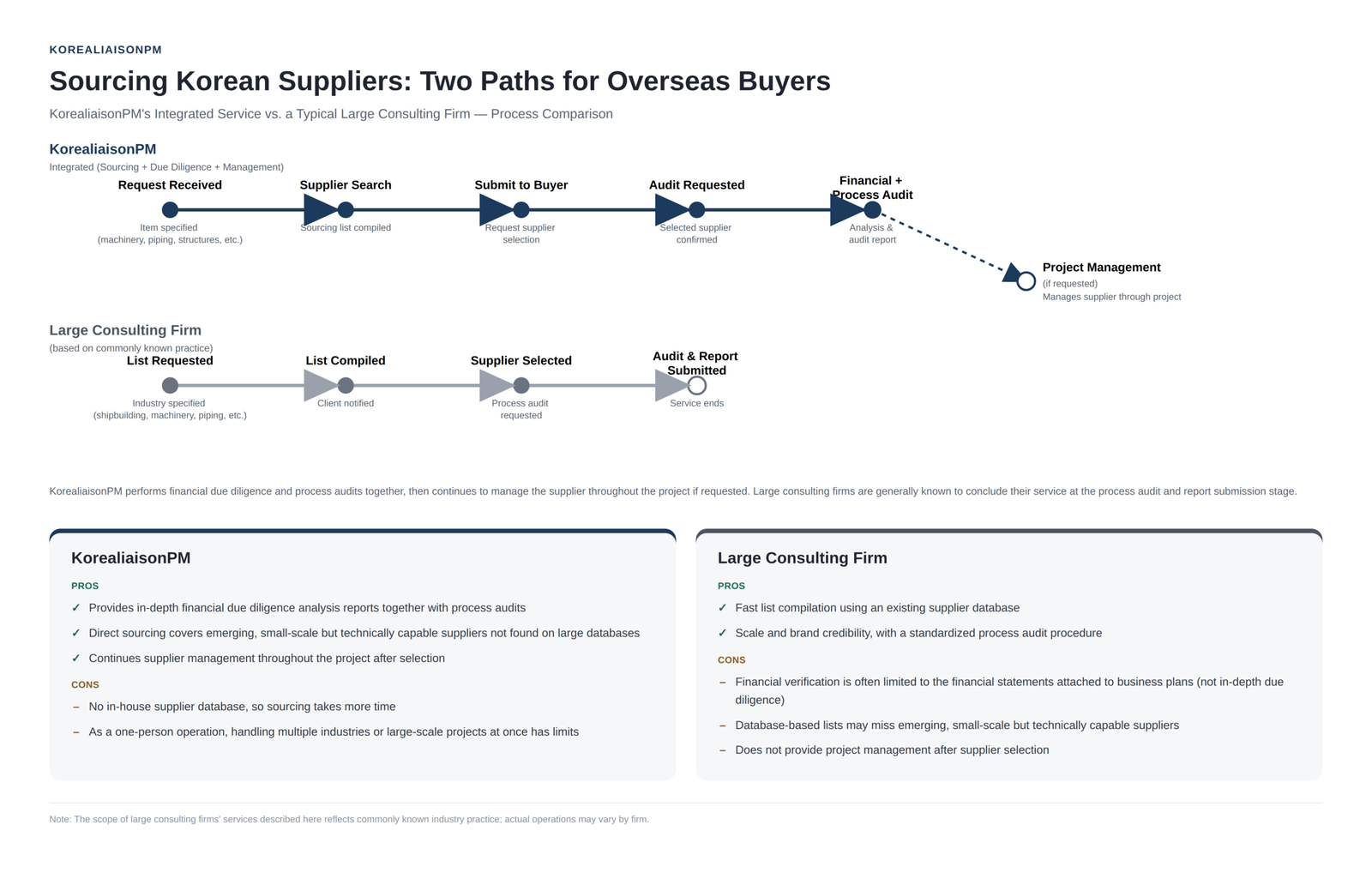
For how this fits into a full supplier evaluation, read Sourcing Korean Suppliers: Two Paths for Overseas Buyers. To see how I combine sourcing, audit, and project management, visit the Services page.